BHOOTHAKAALAM

Bhoothakaalam is as terrifying as it is clever, a horror drama that is impossible to pin down as being a psychological thriller or a paranormal thriller. It is either or both, depending on how you wish to view it. Neither the title nor the finale provides a spoon-fed answer.

The word bhoothakaalam means “the past” or “past tense”, but it could as well be interpreted as “the age of spirits”. Take your pick.

The games in this film are being played as much in a viewer’s mind as in the goings-on on screen, which of course is how it is in any good suspense story, but in this one more than most.

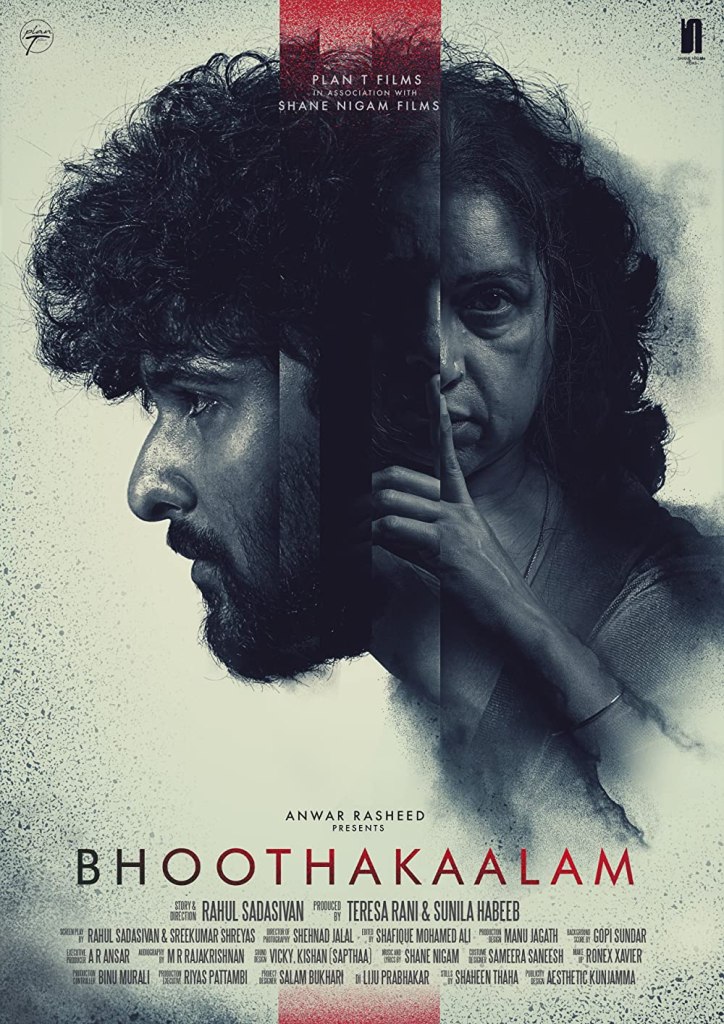
Written and directed by Rahul Sadasivan, Bhoothakaalam revolves largely around a mother and son living together in a house in urban Kerala, haunted by a troubled past and present-day turmoil. She, Asha, is a schoolteacher and is undergoing treatment for clinical depression. He, Vinu, is a frustrated unemployed graduate.

They love each other but have allowed their stresses, resentments and bitterness to fester for years. Soon, unnerving night-time occurrences in the house further disrupt their existence.

The film initially conveys the impression that it will follow oft-visited scary movie conventions – loud music, sudden movements – but don’t be misled. Cinematographer Shehnad Jalal’s framing, the background score by Gopi Sundar and Shafique Mohamed Ali’s editing for Bhoothakaalam are far from formulaic. Their weapons are taken from an existing arsenal, but the way they employ them is outstanding. Vicky and Kishan’s sound design is notable for its use of silences, which is unusual for an Indian thriller.

With this assembly of talents at work, the tension in Bhoothakaalam gradually builds up as the narrative gathers momentum, and stray clues to what might possibly be happening are scattered throughout the plot, until the dramatic interval point after which chills pile up on chills, all leading up to an unrelenting, elongated and frightening climax.

Revathy has such mastery over her craft that she makes her fears entirely our fears and does not appear to strain a single extra nerve even when the camera gets so close to her that it looks set to bore into her skin. It is the Malayalam film industry’s great loss that, despite its apparent progressiveness, it gives this wonderful actor so few parts because of its preoccupation with men’s stories featuring youthful women on the margins.

Shane has so far worked in some smashing films of the ongoing Malayalam New New Wave. He was excellent in Kismath, Eeda and Kumbalangi Nights. Here, he confidently matches up to Revathy, with his fatigue, his distress and his pain etched into his face and his demeanour.
By dwelling on mental health at length, it does more than most Indian language cinemas do, but it is not as lucid as most Malayalam films these days are about psychiatry and the treatment of ailments of the mind, especially when it does not address the irresponsibility shown by Asha’s doctor (Gilu Joseph) and in its fuzziness over Saiju Kurup’s character’s area of expertise.

Through all this, Bhoothakaalam’s focus never strays from its goal of terrorising the audience.
MEPPADIYAN

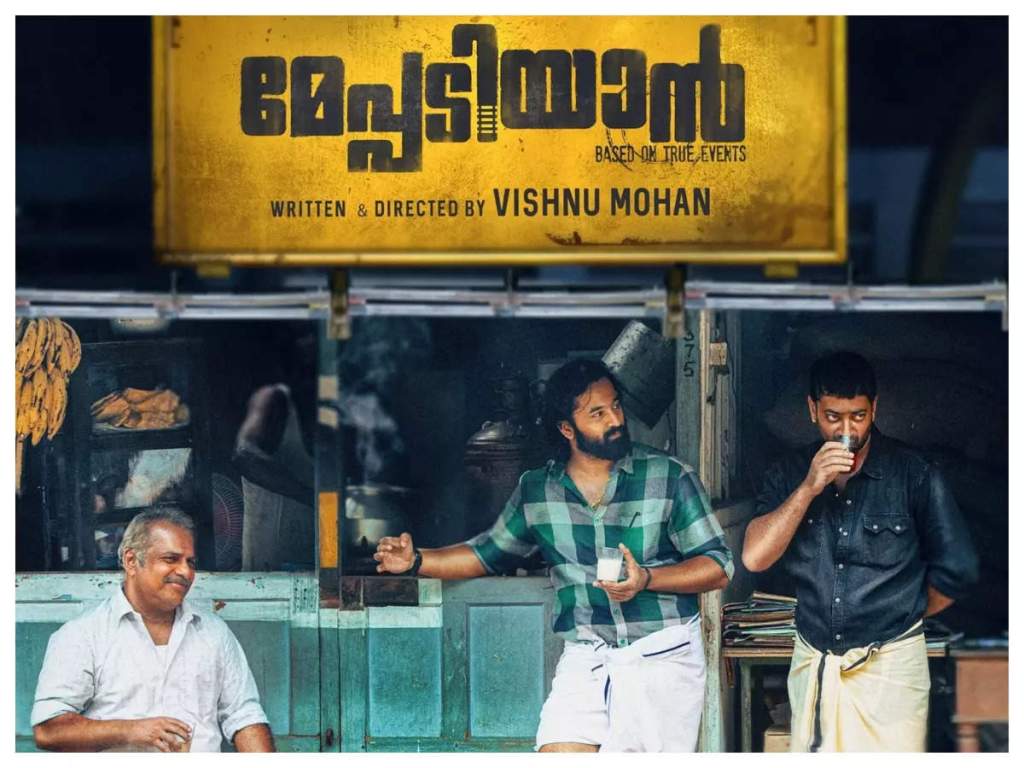
Meppadiyan by Vishnu Mohan is a mix of clichés and interesting plot twists. The story here will remind you of the family dramas prominent in Malayalam cinema almost two decades ago. Vishnu Mohan basically revamps that genre with a central conflict that is relatable to nearly all the middle-class people in society. Thus Meppadiyan becomes this dramatic entertainer that plays it for the gallery.

Jayakrishnan, an automobile mechanic, is our main protagonist. He is this gentleman character who has done nothing wrong in his life. His family loves him, his girlfriend cares about him, and his customers are fond of him. Basically, he is that great boy next door who only knows to help. At one point, his friend Philip comes to him with the idea of buying a plot that could well help them in the future. But the journey to purchasing that piece of land makes Jayakrishnan’s life incredibly difficult and how he tackles the hurdles in front of him is what we see in Meppadiyan.

Of late, it has been a bit difficult for me to enjoy Sathyan Anthikkadu movies mainly because of their repetitive nature. A similar issue is there with Meppadiyan. The beats are highly familiar. You clearly know what will happen in the next moment, and you are just hoping the director will do something to break the usual tone of the film. The movie’s first half is almost a tribute to movies like TP Balagopalan MA. But in the second half, Vishnu Mohan decides to shift the tone to more of a thriller. A man fighting against a flawed system by being smart is an exciting idea. Even though it is kind of over the top on many occasions, the anger almost all of us have in us against the bureaucratic system works in favor of the film.

In terms of presenting the emotional aspects of the character Unni Mukundan definitely shows an improvement. I liked how he shifted from that helpless guy to a man with a plan in the registrar office sequence. The dialogue delivery is still an issue whenever he is doing scenes with too manydialogues. Saiju Kurup was convincing as the irresponsible Philip Varkey. Aju Varghese was fine in that serious negative shade character. Still, I don’t understand the necessity of that first scene featuring him. Anju Kurian is the quintessential pretty heroine. Indrans, Kalabhavan Shajon, Kundara Johny, Nisha Sarang, Manohari Joy, etc., are the other prominent names in the star cast.

As I said, the treatment of the story follows the old-school pattern. At the beginning of the movie, we have a song that tries to establish Jayakrishnan as everyone’s favorite. And the film gradually follows the predictable path of hurdles coming in front of the character one after the other. As I said, the movie wants to play it for the gallery, and Vishnu Mohan creates sequences where our hero jumps across the hurdles in a seemingly impossible way. The frustration through which the character goes through is relatable, and it helps the movie a lot in covering up its basic feel. There is also a subtle layer of communal politics in the film.

Meppadiyan is a watchable drama that goes back to familiar tropes of the so-called “family” movies. The second half of the movie, where we see the hero fight back against the system, certainly gives the movie the escapist joy we expect from a commercial film. With a run time of just over two hours, Unni Mukundan’s first production venture is a passable film.

VALIMAI

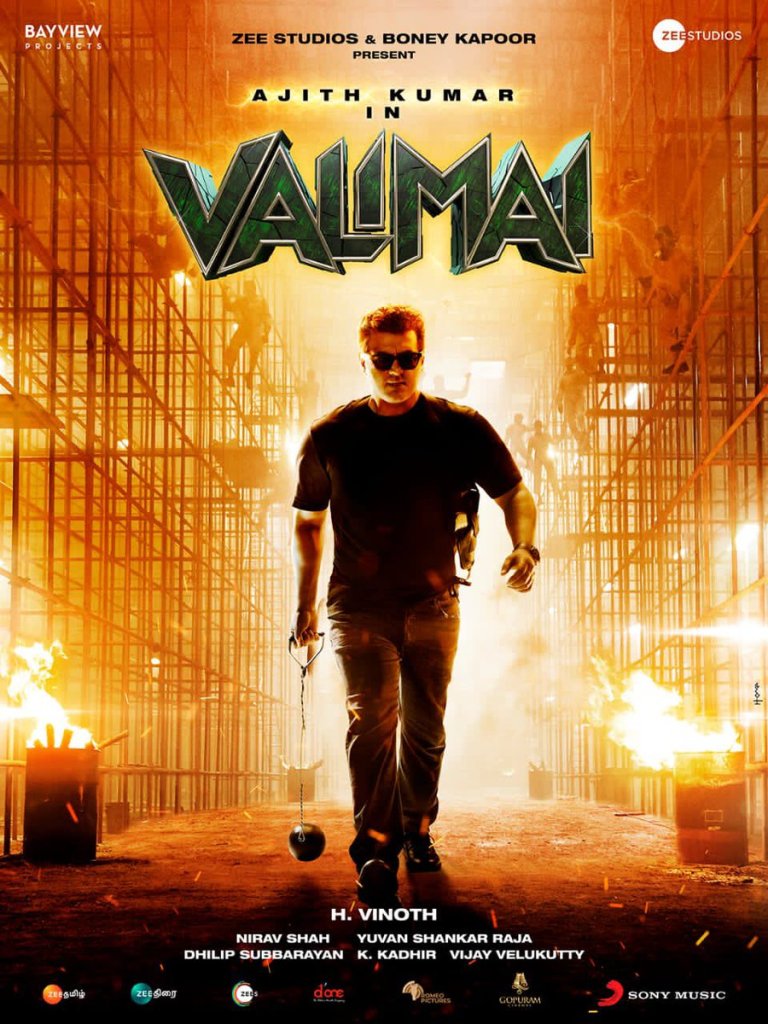
Valimai is a film written and directed by H Vinoth, and produced by Boney Kapoor under the banner Bayview Projects LLP. The film has Ajith Kumar and Kartikeya Gummakonda in the lead roles while Huma Qureshi, Sumithra, Achuth Kumar, Selva GM Sundar, Chaitra Reddy, Pearle Maaney and others play crucial supporting roles. The film has music by Yuvan Shankar Raja, and cinematography by Nirav Shah.

Ajith Kumar plays the role of Arjun Kumar IPS, a police officer touted as a people’s cop. He is someone who doesn’t believe in custodial violence or encounters, and roots for reforming criminals. When a gang of bikers wreak havoc in Chennai, snatching chains and killing people mercilessly, it is upon Arjun’s shoulders to save the city and find the root cause for all this.

Whenever we see a cop film in Tamil Cinema, there is a sense of superheroism attached with the lead cop. They will be portrayed as people who have the power to do anything and everything, and that would also fit the commercial cop film genre. The biggest risk that director H Vinoth has taken here is that he has created a socially responsible cop who understands perfectly, the socio-economic reasons behind the crimes. And this risk pays off big time.

Vinoth’s clarity and sense of direction stands out big time, and that can be seen in the screenplay. He takes his own time to establish the characters and how the crimes happen before introducing Ajith Kumar. There are very few scenes that are flatly staged.

This is an action movie and there is not a single fight sequence that sticks out. The standards are set high, literally every single one of them packs a punch. The innovativeness stunt master Dhilip Subburayan has brought out needs appreciation. Apart from Ajith, this is what shoulders the entire movie. The emotional scenes might not work for a few but the way they are placed keeps reminding the audience what is at stake for Ajith’s character and why he cannot be a superhero.

Ajith’s screen presence is definitely a big plus for this film, but a bigger positive is that the film doesn’t depend on that alone. Huma Qureshi and Kartikeya Gummakonda shine well, and the latter’s physique and menacing looks add more weight to the antagonist character.

Technically too, the film has a lot of exquisite frames early on, and Dhilip Subburayan’s stunt choreo is ably supported by Nirav Shah’s cinematography. A testament to that would be the construction site fight sequence in the second half where sparks fly, both literally and metaphorically. The songs slow down the screenplay slightly but they aren’t too many in number so that doesn’t look like a big deal, and the stellar background score by Yuvan Shankar Raja keeps the narrative engaging.

Overall, despite the 3 hour runtime, the film is highly engaging and entertaining. The film promised action, and it delivers the promise without any doubt. The last time fans had a glimpse of their favourite star was at least 900+ days back. And he’s back with a bang to turn the theatres into a ‘thiruvizha’.

JHUND

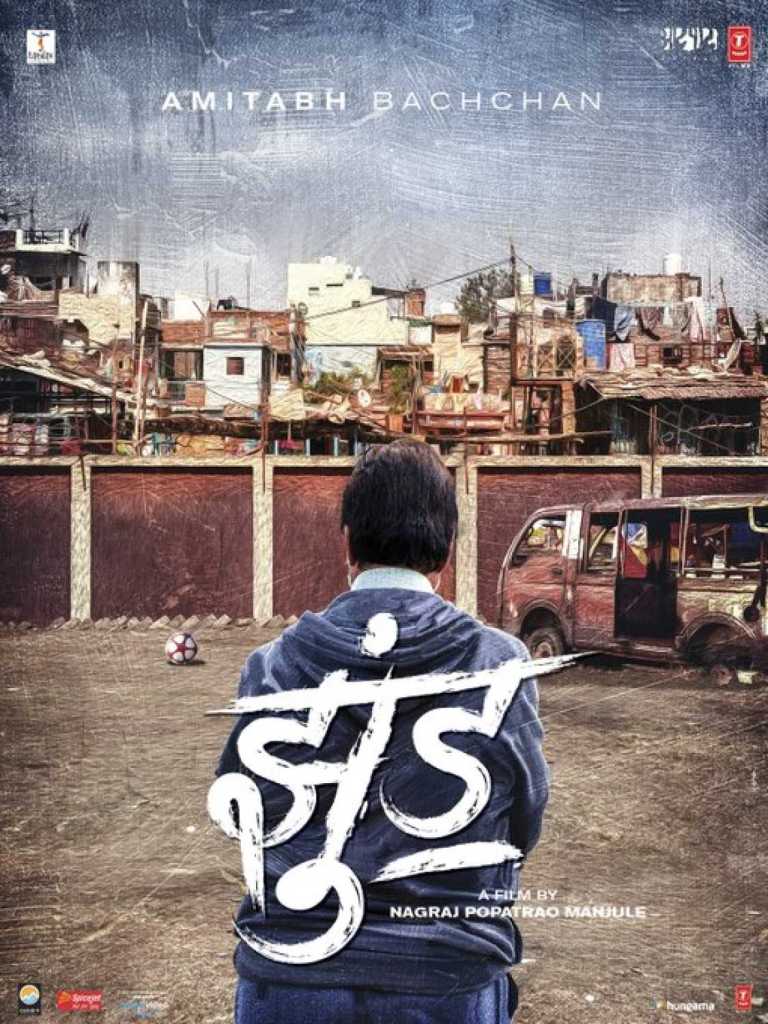
Marathi filmmaker Nagraj Manjule’s maiden Hindi movie Jhund is a fairly engaging social drama that strikes a chord because of Amitabh Bachchan’s towering screen presence and its sincerely-executed narrative. The film is set in Maharashtra and revolves around what happens when an aged professor gives youngsters from the slums an opportunity to lead a better life through their passion for football.

Contrary to perception, the film is more about what the game represents rather than the game itself. The basic story is easy to relate to as it explores the challenges faced by underdogs, a universal theme. It has a socio-political undertone, something that makes certain portions even more biting. The premise reaches its potential as the writing packs a punch despite minor shortcomings. Manjule utilises Big B the actor to the fullest, something that wonders for the film.

Jhund begins with a few realistic scenes that introduce the viewer to the film’s world. These segments hit hard as they are as raw as can be and ultimately set the stage for Bachchan’s entry. This particular sequence works because of its organic intensity. Manjule decides against playing up Big B’s ‘Megastar’ image, a good decision given the movie’s genre.

While underdog sagas are the proverbial staple diet of movie buffs, they tend to get a bit predictable at times. Take Sarpatta Parambarai for instance. The boxing bouts featured in the movie did not have a great deal of novelty. They, however, worked as the staging was right as rain. The same applies to the football matches in Jhund. This, however, is not a major issue as commercial cinema is synonymous with formulae.

Jhund’s biggest triumph, however, is the fact that it conveys strong messages through simple scenes. The climax sequence, set at the airport, is a case in point

Coming to the performances, AB Sr is the heart and soul of Jhund. The actor surrenders himself to the script, using his rich baritone to add depth to the realistic dialogues. His work in the courtroom sequence in particular is as iconic as it gets. It has shades of his monologues from Pink and Chehre.

The rest of the cast, which features relatively less established names, serves its purpose.

Jhund has no scope for commercial elements like item songs and romance. The makers, fortunately, don’t force these aspects into the narrative. The title song is lifting and makes for a good watch on the big screen. The other aspects have been handled well.

BRO DADDY

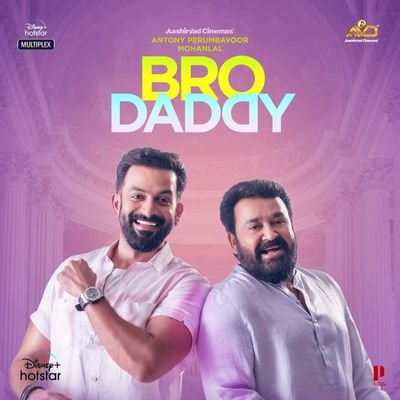
Right from its promos, Bro Daddy has been giving the vibes of an aesthetically shot high-class family comedy drama, rich with opulent settings, a Kottayam Christian background and some buoyant characters. Offering an extended fairy-tale version of the same, the movie is quite eager to entertain through every inch of it, through its 2.5 hours plus running time.
Though the parents of Eesho (Prithviraj Sukumaran) and Anna (Kalyani Priyadarshan) have been friends for years and are eager to get their children married to each other, the youngsters aren’t too keen to do the same. Eesho’s dad John (Mohanlal) also feels that his son can’t impress Kurien (Lalu Alex), Anna’s father, as a son-in-law. However, both the families are in the dark regarding how the youngsters’ lives are in Bengaluru, where both of them work.
Thanks to its talented cast, Bro Daddy keeps one interested in the proceedings right from the beginning. Prithviraj and Mohanlal offer some interesting moments of the equations between a son and dad, who don’t have much age gap between them. Lalu Alex has also tried to tickle our funny bones at various stretches in the film, in which Kalyani Priyadarshan’s characterisation, too, is refreshing. Deepak Dev’s music suits the mood of the movie quite well.
On and off, there are moments when one feels like being on a luxury home tour, as the film navigates through situations with hardly any depth. From some of the too-good-to-be true character portrayals to extremely predictable dialogues – including the ones in the climax – the movie also makes one wonder whether any thought was put into adding novelty into the content. Soubin Shahir’s character tries hard to force laughter into the mess, but often fails. The film’s duration can come across as lengthy, especially in those portions where one can clearly foresee the outcome – like the hospital scene involving the characters of Mohanlal, Lalu Alex and Jagadish.
The fans of the leading actors looking for some age-old lightweight entertainment in a Kerala Christian setting can give the film a watch.

HRIDAYAM

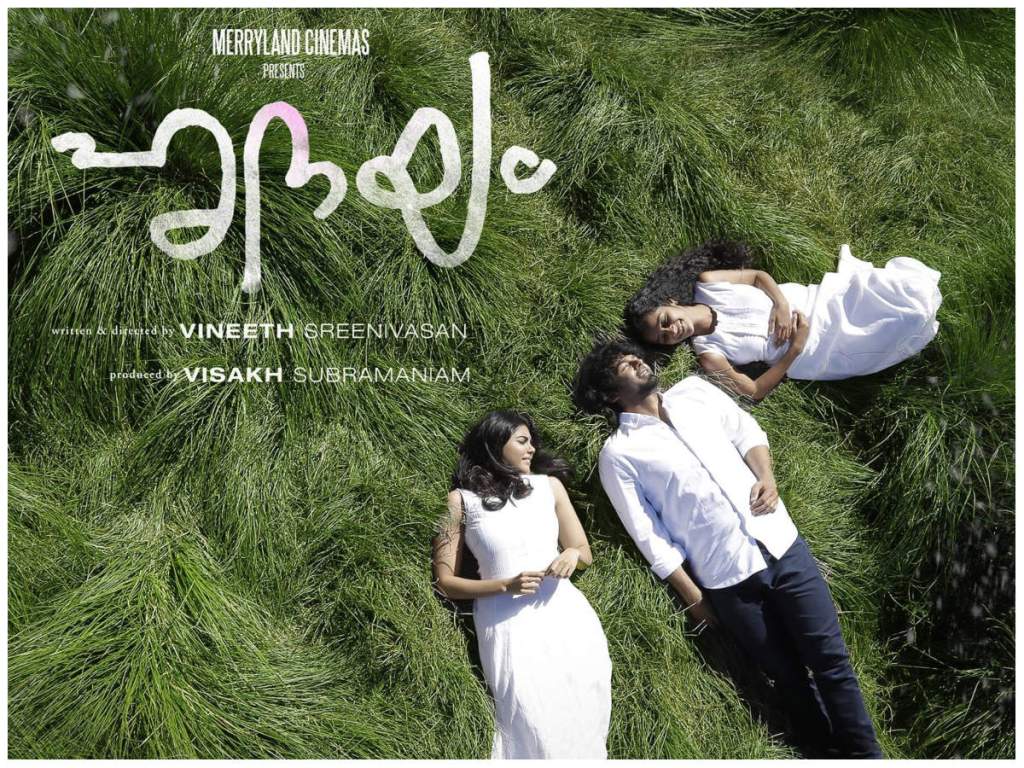
The Vineeth Sreenivasan directorial shows different phases in the life of the protagonist Arun Neelakandan played by actor Pranav Mohanlal. His journey from being a Engineering student to a photographer and his love life and his two partners during the two different phases of his life is the storyline of the movie. The first and short lived relationship of Arun and Darshana(played by Darshana Rajendran) and the impact it has on their future is portrayed in the first half. The director though fails slightly to showcase the depth of the relationship between them but becomes successful in showing how a breakup should not be a way to be self destruction but how a person can move on and still be happy and have a healthy relationship further. The movie overall has some clichéd dialogues and a plot but the music upholds the movie, Hesham Abdul Wahab’s 15 songs elevates the movie to a next level. All the cast have shown a good performance and done their part well especially Kalyani Priyadarshan, Pranav Mohanlal and Darshana Rajendran. Keeping aside some faulty character development and improper depiction of complexities of the characters, the usual Vineeth Sreenivasan feel-goodness can be seen in this movie.

GEHERAIYAN

Gehraiyaan is about intimate and complex relationships of the modern times and the struggle people face in handling it . The feeling of doing things with guilt and uncertanity that can’t stop doing it; this is the layer of the film and this storyline has dealt with it so organically that we get to feel the complexity in us and can’t wait to get through this and see what do they have for the dessert. Every aspect and angle of relationship and different relationships are put together so beautifully and philosophically that we can have a takeback.

Gehraiyaan is Deepika’s show all others have done a very good job but Deepika stands tall by every single expression either be lust, love, pain, uncertainity, guilt, anger or helplessness. All these feelings with immense perfection and intensity this is what that makes Gehraiyaan more artistic. Music just pushes every scene to move but we never get to sense it during the watch and after the watch the melo music stays with us. Everygood film has a good writing with all above mentioned, the most important for everything that took place is the writing perfectly written script with brilliant execution with an intension to make us feel what they felt while writing was perfectly achieved by the crew .

This is a good watch and also hits hard about the toxic and complex relationships of the modern age.

AJAGAJANTHARAM

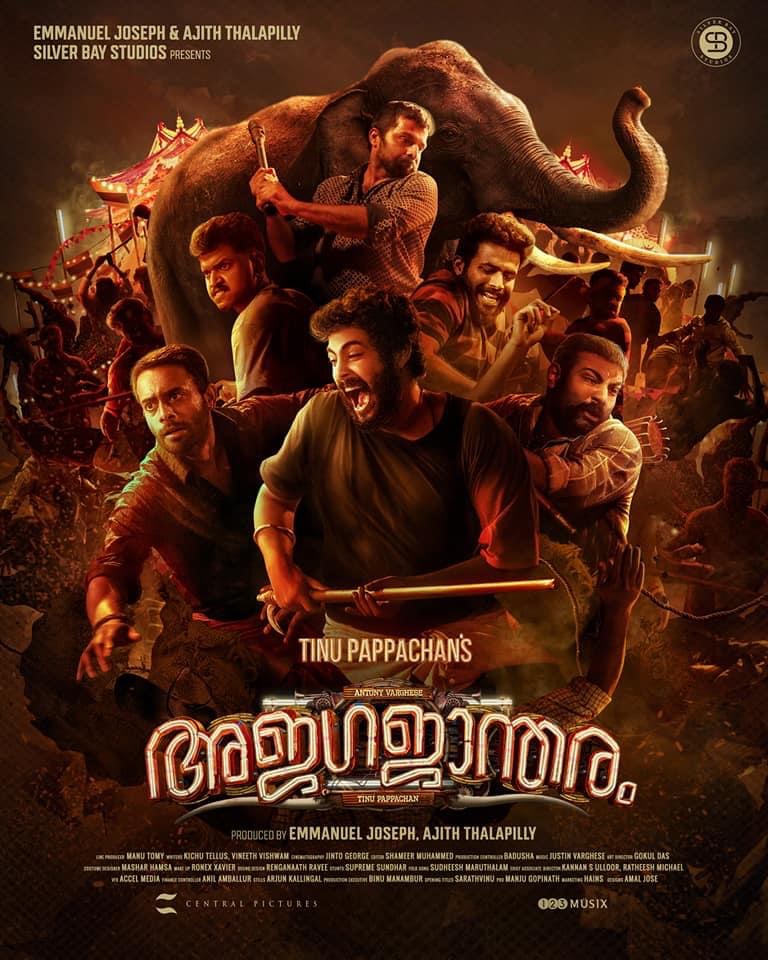
In terms of production style, photography, and storyline, Tinu Pappachan’s second film, Ajagajantharam (difference between a goat and an elephant), is Angamali Diaries reloaded. The action sequences, on the other hand, stand out because they are authentic, hard-hitting, and meticulously planned. There isn’t much of a plot here, but the picture benefits greatly from the sincere performances of every small and large performer.

Antony Varghese is being typecast for yet another dark, earthy film, so he must be cautious in the future. Arjun Ashokan once again demonstrates his versatility as an actor. The DOP is excellent, but it’s Justin Varghese’s score that really stands out. Ajagajantharam is a technical masterpiece. The climax fight scene is one to watch out for and full marks to everyone involved in the making.

Overall the movie is a wonderful theatre experience. Caution before watching the film, Do not look for a story, because there isn’t one. Its a Festival, its pure action, its Pure entertainment and nothing else.

GANGUBAI KATHIAWADI

Based on S. Hussain Zaidi and Jane Borges’ hard-hitting book ‘Mafia Queens of Mumbai,’ ‘Gangubai Kathiawadi’ chronicles Ganga’s rise to power and fame from a demure small-town girl in Gujarat, to the undisputed queen of kamathipura in Mumbai.
Women invitingly standing at the doorstep of a kotha (brothel) in the bustling bylanes of south Mumbai’s infamous red-light area Kamathipura, is a scene that is real, tragic and dramatic. Director Sanjay Leela Bhansali’s film ‘Gangubai Kathiawadi’, set entirely against this gritty backdrop of Mumbai tells the story of many young women, who were sold off to brothels for a few hundred, solely through the eyes of its protagonist Gangubai (Alia Bhatt).
It’s sometime in the early 1950s or 1960s when a starry-eyed and naive Ganga is conned by her lover Ramnik (Varun Kapoor) to elope with a promise that he will pave the path for her to make it as a heroine in Bollywood. What turns out and the truth as we all know is that that Ganga (who rechristens herself as Gangu, and eventually Gangubai), ends up being the heroine of Kamathipura instead. Over the years, Kamathipura becomes her home, the brothel girls her family, and all of Kamathipura her domain. But her journey is fraught with challenges, opponents, and a social stigma that brings out the fighter within her.
The beauty of the film lies in how it shows Gangu’s character transform through various stages in her life. The narrative takes time to build up, even slowing down along the way, but not without leaving an impact through fiery dialogues and powerful moments.
It’s an Alia Bhatt show all the way, as she slips into the role of the boss-lady in a world-full of brothels and lustful men. It might take a while to feel comfortable with the idea of Alia playing this part, but by the end of it, you find yourself rooting for her – especially when you watch her dish out dialogues with supreme confidence, audacity, and a killer instinct.
Ajay Devgan, even in a brief role as Rahim Lala, leaves a solid impact. The rest of the supporting cast like Seema Pahwa, Vijay Raaz, and Jim Sarbh put their best foot forward but don’t have much room to shine. Shantanu Maheshwari as Gangu’s love interest puts out a fine performance, and the bitter-sweet moments between Gangu and him are among the more memorable parts of the film.
Bhansali drives his narrative much like the book with each challenge and episode moving like a chapter. While there is a lot packed into the film – like how Gangu turns into an activist for the women in Kamathipura, her liaison with the city’s underbelly and her political aspirations — we are still left craving to know more about the rest of her life and how it all unfolded. There are some beautifully crafted, heartbreaking moments in Bhansali’s signature style – with a lot of finesse and flair – however, the narrative does not delve deep into any one aspect of Gangu’s life. The production value is top-notch. Each song is masterfully and colourfully picturised – even while Gangu stands like a vision in white in the midst of it all. But none of the songs, other than Dholida, are too memorable.
Like every other Bhansali film, this one, too, is a visual delight. While the camera captures the dark alleys of Mumbai’s red-light area, it does so with extravagance and ample gloss. Yes, the story brings to the fore some poignant truths about our society, the lives of sex-workers and raises some hard-hitting and pertinent questions, but there is plenty about her life that remains untold. The plot holds on to some hugely dramatic scenes and clap-worthy dialogues, which keep you engaged, in a film that feels too long for it’s run-time. Yet, when you leave the theatre, the larger-than-life world recreated with Bhansali’s vision lingers on your mind and the mystery surrounding Gangubai’s eventful life piques your interest even more.
So, if you’re seeking a real peek into Gangubai’s life, also known as the Mumbai’s Mafia Queen, then you will be left yearning for more. But even with whatever is packed into this drama, there are enough moments that will draw you into this world where nights seem endless and the lights never fade.